About the Course
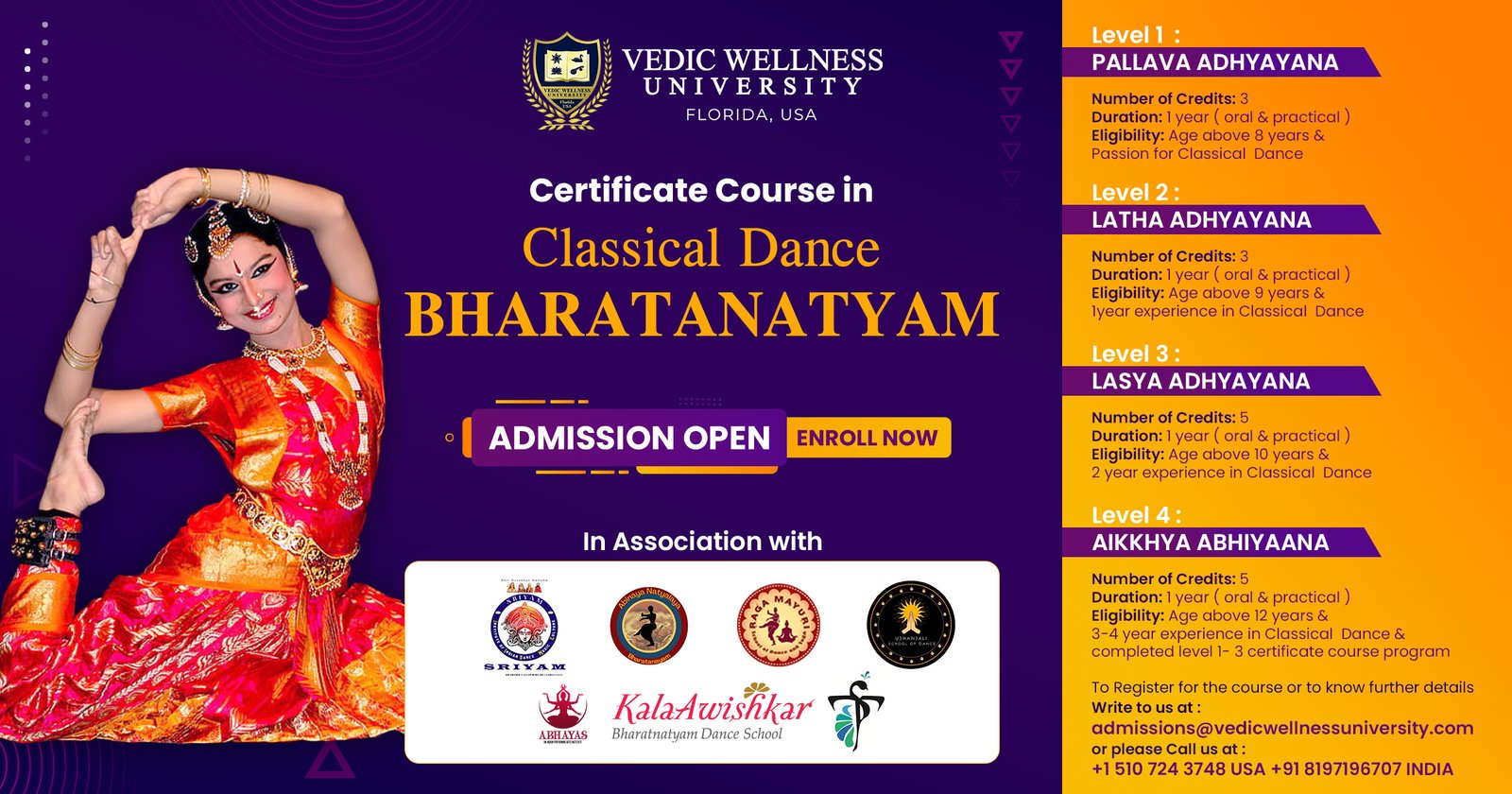
Indian classical dances recognize the core cultural values of India’s diverse regions. They are rich in heritage and are often referred to as a prayer to God. Bharatanatyam is the oldest among the Indian classical dance that originated in Tamil Nadu, India. It is famous primarily in the South Indian states. Bharata, a well-known sage, is believed to have received the knowledge of Bharatnatyam from Lord Brahma, who later recorded it in a Sanskrit book known as the Natya Shastra. One of the fundamental texts on Indian drama and aesthetics is the Natya Shastra. School of Arts & Culture is introducing this Offline Certificate course in Classical dance Bharatnatyam with our Associates globally to prepare the young artists for this Divine Art and take forward the legacy of our culture globally.
Objectives of the Course
- Comprehend the various forms of Indian Classical Dance
- Understand and use the technical terms associated with Bharatanatyam
- Get a basic understanding of Rhythmic structure and Aharya – costumes, jewellery, makeup, region, religion.
- Demonstrate Dance movements in Bharatanatyam
- Extra Yoga, Meditation, and Vedic Chanting sessions

Level 1 : PALLAVA ADHYAYANA
- Number of Credits: 3
- Duration: 1 year (oral & practical)
- Eligibility: Age above 8 years & Passion for Classical Dance
Highlights
- Name & place of 8 Classical dance forms of India
- Knowledge of Guru, Bani of Bharatanatyam, and a brief understanding of the Lineage— Guru, Guru’s Guru, etc.,
- Definition of Bharatnatya (Bha-Ra-Ta)
- Basic Exercises & Asanas (kriyatamaka )
- Demonstrate Chatushra Jaati in three speeds (sarvalaghu ekatala)
- Namasakara –Dhyanashloka & Guru vandana( recite with meaning and its importance)
- Recite with demonstration Asamyutha and Samyutha Hastas (AD)
- Demonstrations of various Adavus (dance steps) in 3 speeds
Examination / Assessment Process
Examination will be conducted at the exam centre / respective institution yearly .
The ratio of the assessment is 70 % – 30% is given below.
The scheme of examination and paper for Level 1 will be as follows:
0
%
Viva or Theory
Viva Voice – Basic Concepts
0
%
Practical
Practical – Performance Based
0
%
Internal
Assessment
Minimum Passing Marks: 50% – Practical, 40% – Viva Theory
Division of credits for Examination:
Highlights
- Name & place of 8 Classical dance forms of India
- Name of the Guru and the school the student follows
- Namasakara –Dhyanashloka & Guru vandana (recite with meaning and its importance)
- Meaning of the term Bharata Natyam (Bhava+Raga+Tala) and its origin.
- Recite Asamyuta & Samayuta hastaa according to Abhinaya Darpana of Nandikeshwara.
- Shirobheda, Drishtibheda, Grivabheda according to abhinaya darpana of Nandikeshwara
- Names of Paadabhedas – according to abhinaya darpana
- Basic Exercises & Asanas (kriyatamaka )
- Demonstrate Chatushra Jaati in three speeds (sarvalaghu ekatala)
Highlights : Practical
Demonstrate the following adavus along with shollukuttu
- Dashavidha adavus- 10 types of steps
- Tattu Adavu- 1 to 4
- Nattadavu: 1 3 5 7
- Mettadavu: 2 types
- Sarikkaladavu(slidingadavu)- 2 types
- Rangakramana
- Vishruadavu(parvaladavu) – 1
- Mandi adavu
- Tattu mettu Adavu
- Jaaradavu (sliding adavu)
- Muktayadavu
- Alaripu-tishra or chaturashra
- Prayers – (Reciting – Demonstrate along with meaning):
- Ganesh Stuthi
- Shlokas from Bhagwad Gita
Level 2 : LATHA ADHYAYANA
- Number of Credits: 3
- Duration: 1 year (oral & practical)
- Age above 9 years & 1 year experience in Classical Dance
Highlights:
- 4 Types of characteristics of Adavus
- Names of Mandala bhedas & Utplavana bhedas & demonstrate
- Recite with demonstration the viniyoga slokas
- Alarippu — Tishra/Chaturashra
- Pushpanjali
- Kauthuvam
- Clear demonstration of minimum three steps in theAdavus with hand gestures and reciting the shollakuttus of the Adavus on hands.
- Jatiswaram
Grading & Assessment for Level 2
The certification will be awarded to the candidates upon the completion of the syllabus which is planned.After the examination is completed and passed with the stipulated pass marks.
The ratio of the assessment is 70 % – 30% is given below.
0
%
Paper 1
Viva Voice – Basic Concepts
0
%
Paper 2
Practical – Performance Based
0
%
Internal
Assessment
Minimum Passing Marks : Practical- 50% , Viva Theory- 40%
Division of credits for Examination:
Highlights: Oral
- 4 Types of characteristics of Adavus
- Padbhedas according to abhinaya darpana
- Names of Mandala bhedas & Utplavana bhedas
- Shlokas of Asamyuta and Samyuta Hasta viniyoga along with meaning
- Kinkini lakshana (characteristics of bells)
- Merits & demerits of a dancer
- Principle of a dancer
- Essential qualities of a dancer
Highlights: Practical
Clear demonstration of a minimum of three steps in the below-mentioned Adavus with hand gestures and reciting the shollakuttus of the Adavus on hands:
- That Tai Taha Adavu
- Kuditta metta adavu
- Peri Adavu: Tai hat tai hi
- Small Tiramaanam Adavu: Ta dhi gina thom
- Mandi Adavu: Tat tai taa
- Yetta Adavu
- Reciting Chatushra & Tishra Jaati in three speeds
- Explaining the following in short:
- Adavu and Laya (Trikaalam)
- Nritta, Nritya, and Natya
- Jatiswaram (In aditala) Shlokas
Level 3 : LASYA ADHYAYANA
- Number of Credits: 5
- Duration: 1 year (Oral & practical)
- Eligibility: Age above 10 years & 2 year experience in Classical Dance.
Highlights:
- Explain in brief Music terminologies like Raga , Taala , Saptaswaras , Saptatala , Sma , Layay etc
- Recite Adavus along with shollukuttu & perform
- Perform & recite Pushpanjali & Kauthuvam , Alarippu
- Perform the following: (should know raga, tala, composer for both and meanings for the Shabdam)
- Jathiswaram
- Shabdam
Grading & Assessment for Level 3 :
The certification will be awarded to the candidates upon the completion of the syllabus whichcis planned.After the examination is completed and passed with the stipulated pass marks.
The ratio of the assessment is 80 % – 20% is given below.
0
%
Paper 1
Viva Voice – Basic Concepts
0
%
Paper 2
Practical – Performance Based
0
%
Internal
Assessment
Minimum Passing Marks: 50% – Practical, 40% – Theory
Division of credits for Examination:
Highlights: Written
- Describe the various Gods – their appearance,alternate names, some stories associated with them
- Write about the life and contribution of somem famous Dancers, Dance Gurus and Historians to Bharatanatyam – eg.: Rukmini Devi Arundale, E. Krishna Iyer, Kapila Vatsyayan, Geeta Chandran(more names will be included from ancient to modern times)
- Explain the Bharatanatyam repertoire. Name and describe the various dances performed in a Bharatanatya repertoire eg.: Alarippu, Jathiswaram etc.
- What are the Navarasas? Explain with examples.
- Explain the various Ashtanayikas.
Highlights: Practical
- Recite Mishrachapu Alarippu
- Recite sollukattu of Jathiswaram and Shabdam jatis performed in YEAR 3, with hasta kriya
- Recite all the remaining Asamyutha and Samyutha Hasta viniyoga slokas with demonstration.
- Perform: (should know the Raga, Tala, Composer information for all and meanings for the Abhinaya pieces and Thillana)
- Mishrachaapu alarippu
- Any 2 of the following abhinaya dances: Padam, Javali, Devaranama, Keerthanam and Ashtapadi
- Thodayamangalam
- Varnam
Level 4 : Bharatanatyam Dance
- Number of Credits: 5
- Duration: 1 year ( Written & practical )
- Age above 8 years and above
Highlights
- Describe the various Gods — their appearance, alternate names, some stories associated with them.
- Write about the life and contribution of some famous Dancers, Dance Gurus and Historians to Bharatanatyam — eg: Rukmini Devi Arundale, E. Krishna lyer, Kapila Vatsyayan, Geeta Chandran (more names will be in- cluded from ancient to modern times)
- Explain the Bharatanatyam repertoire. Name and describe the various dances performed in a Bharatanatya repertoire eg.: Alarippu, Jathiswaram etc
- What are the Navarasas? Explain with examples.
- Explain the various Ashtanayikas.
Practical’s
- Recite Mishrachapu Alarippu
- Recite sollukattu of Jathiswaram and Shabdam jatis performed in year 3, with hasta kriya.
- Recite all the remaining Asamyutha and Samyutha Hasta viniyoga slokas with demonstration.
- Perform: (should know the Raga, Tala, Composer information for all and meanings for the Abhinaya pieces and Thillana)
- Mishrachaapu alarippu
- Any 2 of the following abhinaya dances: Padam. J=vali, Devaranama, Keerthanam and Ashtapadi
Level 4 : AIKKHYA ABHIYAANA
- Number of Credits: 5
- Duration: 1 year (oral & practical)
- Age above 12 years & 3-4 year experience in Classical Dance and completed level 1- 3 certificate course program
Highlights:
- What are the Navarasas? Explain with examples.
- Recite Mishrachapu Alarippu
- Recite sollukattu of Jathiswaram and Shabdam jatis performed in YEAR 3, with hasta kriya
- Recite all the remaining Asamyutha and Samyutha Hasta viniyoga slokas with demonstration.
- Abhinaya dances: Padam, Javali, Devaranama, Keerthanam and Ashtapadi
- Thodayamangalam
- Varnam
- Thillana
Grading & Assessment for Level 4 :
The ratio of the assessment is 80 % – 20% is given below.
0
%
Paper 1
Viva Voice – Basic Concepts
0
%
Paper 2
Practical – Performance Based
0
%
Internal
Assessment
Division of credits for Examination:
Performance in Annual program
Academic Team
Dr Sheela
Sridhar
Ms. Shraddha Joglekar
Ms. Latha
Raviraj
Ms. Ragasindhuja
Ghattamaneni

Ms. Naina
Shastri

Smt Radhika Adhikari

Smt Nirupama Chandrasekran

Smt Soumya Sreekumar

Smt Sheela Srinivasa
Career Opportunities
The students who study Certificate and Diploma in Performing Arts can have some of the unconventional career opportunities as below:
- Dance Performers
- Actors and Actresses (Theatre)
- Dance, Music and Theatre teachers
- Arts Entrepreneurs
- Arts Managers
- Dance choreographers
Associates




Want to associate with us? Click here.